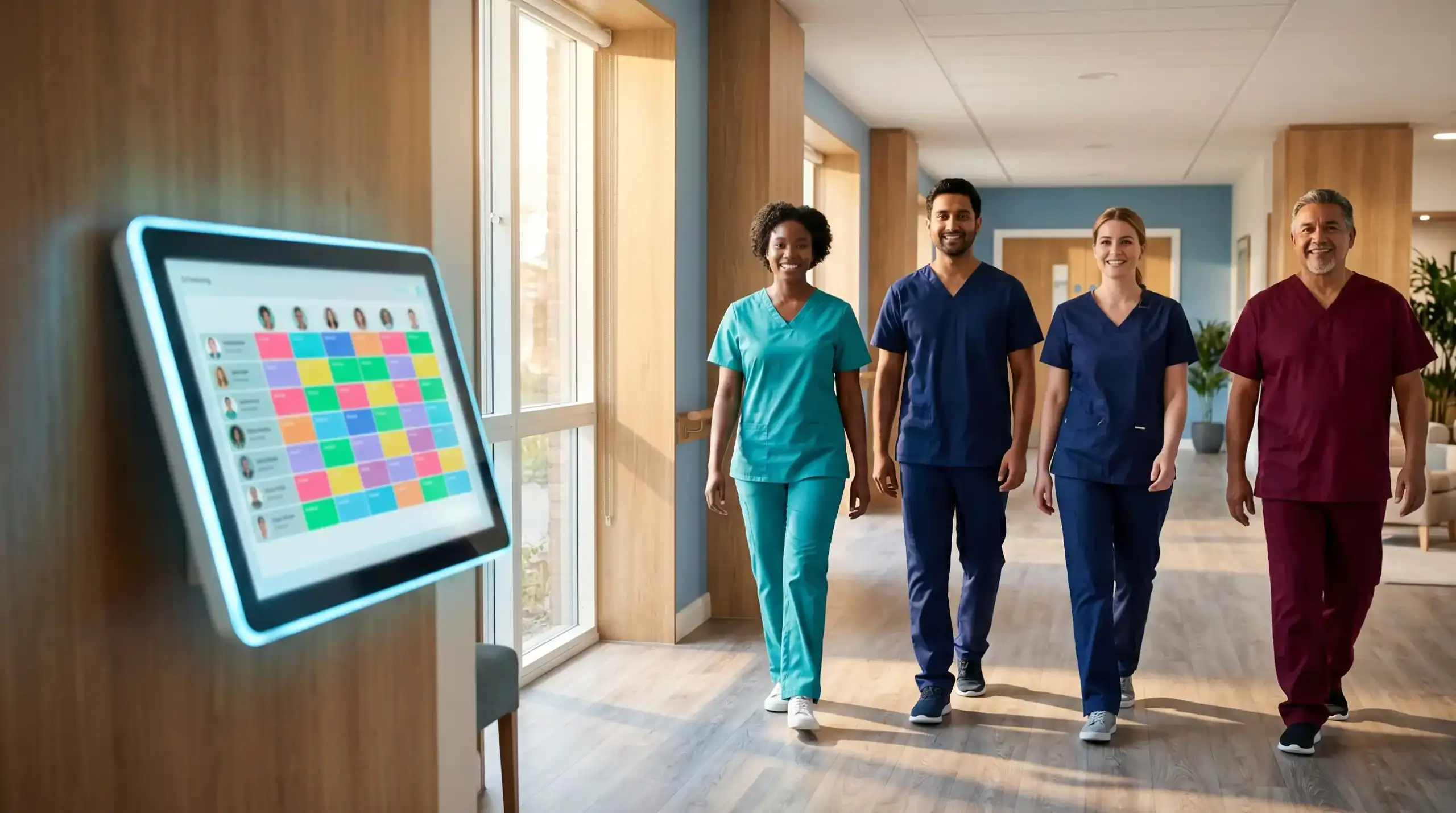
The Ultimate 2026 Guide to HR Software for Care Homes: Workforce Management Logistics
By John Nimo, RGN | Updated: 14th May 2026
The Direct Answer
Implementing specialised hr software for care homes is the only mathematically viable strategy to exit the agency death spiral, automate CQC compliance matrices, and manage the logistical complexities of a deskless workforce in 2026. This technology transforms severe operational inefficiencies into quantifiable profit and compliance stability.
The adult social care sector in the United Kingdom is currently undergoing a
structural transformation necessitated by fiscal instability, regulatory tightening, and a pervasive labor deficit. In 2024 to 2025, gross current expenditure on adult social care by local authorities in England reached an overwhelming £29.4 billion.
Despite this massive injection of capital, the reliance on legacy administrative frameworks has reached a point of catastrophic obsolescence. Managing a modern care facility requires unparalleled logistical precision.
To survive and scale, decision-makers must deploy elite
hr software for care homes, transforming human resources from a source of administrative friction into a highly optimized,
revenue-protecting strategic asset.
What is the Economic Architecture of the “Agency Death Spiral”?
The foundational challenge within adult social care remains the widening gap between escalating operational costs and stagnant funding models. This environment creates the
“Agency Death Spiral”—a phenomenon where the inability to retain permanent staff leads to a chronic reliance on high-cost temporary labor, which further depletes the financial resources necessary for permanent staff retention and development.
The reliance on premium-rate locums and agency workers creates a profound financial hemorrhage. Recent data indicates that the median agency cost per departing care worker can exceed £3,683, with extreme cases reaching upwards of £17,000 per vacancy.
As of March 2024, approximately 40% of adult social care workers in England earned below the
Real Living Wage (RLW), a factor that directly feeds this disastrous attrition cycle. When you factor in direct recruitment fees, mandatory training, and lost clinical output, the total estimated cost of a single vacancy is a staggering £9,282.13.
Facilities cannot simply recruit their way out of this deficit. Implementing robust hr software for care homes is the only
operational intervention capable of arresting this catastrophic financial drain.
How Can HR Software for Care Homes Exit the Locum Trap?
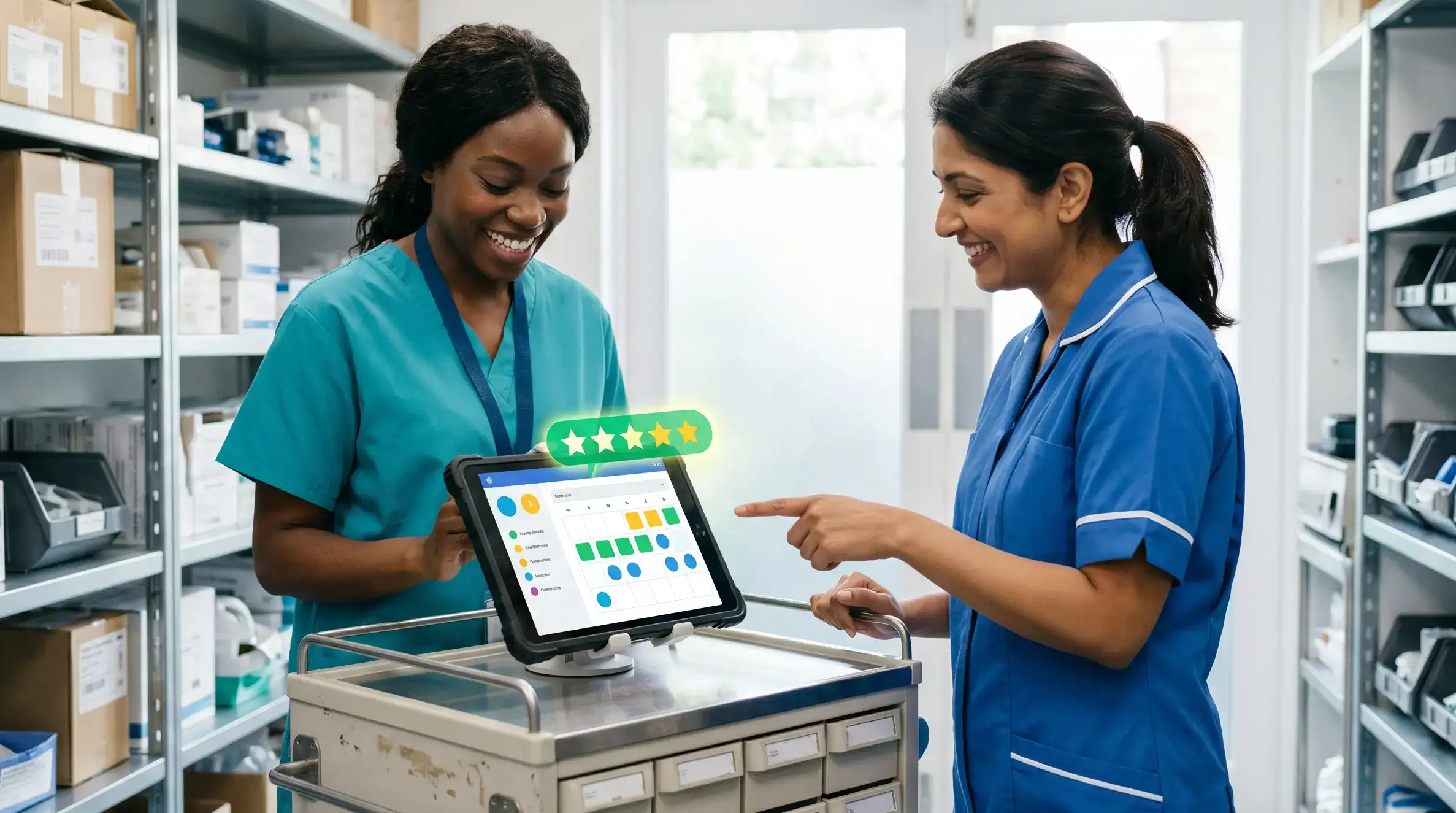
To truly stabilize a workforce, clinical leads must transition from reactive firefighting to predictive logistical planning. Predictive digital rostering, a core feature of advanced hr software for care homes, serves as the primary financial tourniquet against the locum trap.
By utilizing historical demand data and real-time staff availability, premium hr software for care homes allows managers to identify scheduling gaps weeks in advance. This foresight enables homes to fill shifts with permanent staff through
automated shift-bidding before the high-cost emergency agency window opens.
Furthermore, hr software for care homes actively facilitates “soft-recruitment.” High-performing agency workers who find your digital systems easy to use are exponentially more likely to consider a permanent role.
If an agency nurse consistently receives high ratings from permanent team members, the software can trigger an automated, personalized recruitment outreach. This bypasses expensive traditional headhunters and directly converts proven talent into
permanent capital.
The retention economics are clear: when workers feel supported and have autonomy over their schedules via mobile-first platforms, the turnover rate drops to 31.6%, compared to 40.6% for those without such support.
How Do You Manage the “Deskless Reality” of Healthcare Workers?
Healthcare workers are inherently “deskless,” meaning they do not have access to traditional corporate communication channels. Whether providing 24/7 support in a residential nursing home or traveling between clients in a domiciliary setting, this physical disconnect creates a massive administrative burden.
In a traditional analog environment, a night-shift carer or a domiciliary worker must often travel to a central office during daylight hours merely to sign timesheets, request annual leave, or view their training record. This immense friction leads to severe “administrative fatigue” and high query volumes for management.
Specialized mobile-first hr software for care homes completely solves this logistical nightmare. By deploying comprehensive hr software for care homes, you place the entire HR infrastructure directly into the worker’s pocket.
A mobile-first app allows the employee to instantly view their roster, securely swap shifts, access digital payslips, and complete mandatory CPD modules during on-site downtime.
How Does Software Handle Domiciliary Care Travel Time Compliance?

The management of domiciliary care workers presents a highly specific subset of logistical and legal challenges, particularly regarding travel time verification. The legal landscape in the UK has become increasingly complex following rulings that travel time between clients must be treated as “working time” for
National Minimum Wage (NMW) purposes.
Without digital tracking, providers face significant risks of “unauthorized wage deductions” and subsequent tribunal claims. A glaring example is the Whittaker v Hartley Domiciliary Care Ltd tribunal, which ordered the reimbursement of unpaid wages and expenses that had been manually miscalculated.
Elite hr software for care homes eliminates this litigation risk entirely. Advanced hr software for care homes utilizes
GPS-enabled “breadcrumb” tracking to provide a mathematically perfect, auditable record of travel duration and client visits.
Furthermore, these digital systems can automate the complex calculation of “predictability pay” in regions where Fair Workweek laws apply, automatically flagging shifts changed with less than 14 days’ notice.
What is Mechanised Compliance for CQC Inspections?
For every healthcare manager in the UK, maintaining continuous compliance for Care Quality Commission (CQC) inspections is a primary source of operational anxiety. Relying on a static Excel spreadsheet to track mandatory training and DBS renewals for dozens of staff members is a ticking time bomb.
Mechanised compliance involves integrating an automated Learning Management System (LMS) directly into your scheduling architecture. High-end hr software for care homes handles this flawlessly by enforcing
“Hard-Stop Rostering.”
If a required certification expires, the software physically prevents the manager from assigning that staff member to a shift, forcing legal compliance by default. When an inspector arrives, attempting to manually verify paper files is an immediate red flag.
With integrated hr software for care homes, the manager can generate a comprehensive digital Training Matrix in seconds, providing timestamped, irrefutable evidence of every certificate and
competency check.
How Does Patient Continuity Protect CQC “Caring” Scores?
The CQC “Caring” and “Responsive” ratings are directly correlated to the stability and continuity of your frontline staff. High turnover leads to a revolving door of transient agency staff who do not know the residents’ nuanced clinical and emotional requirements.
Residents in dementia or end-of-life care rely heavily on non-verbal cues and deeply established routines. When a rota is filled with unfamiliar agency workers, these subtle nuances are lost, leading to increased resident anxiety and highly dangerous “challenging behaviour” incidents.
Efficient hr software for care homes protects the CQC “Caring” rating by ensuring a high Patient Continuity Score. By utilizing predictive scheduling within your hr software for care homes, managers can ensure the same team of permanent carers stays designated to a specific unit.
This stability allows for the rapid observation of subtle clinical deteriorations that a temporary agency worker would undoubtedly overlook.
What is Wage Leakage and Payroll Friction?
In a healthcare industry operating on razor-thin profit margins, “wage leakage” represents a silent but significant threat to financial sustainability. Payroll leakage is defined as any payroll expense that is paid but not earned, primarily caused by manual errors, rounding, or poor time tracking methodologies.
Research by the
American Payroll Association confirms that companies using traditional manual timecards experience error rates between 1% and 8% of total payroll. In a facility with a £2 million annual payroll, even a conservative 3% error rate equates to £60,000 in lost capital every single year.
Common sources of this leakage include rounding errors (e.g., staff rounding up a start time from 08:07 to 08:00), malicious buddy punching, and extreme complexity mismatches. Incorrectly calculating “sleep-in” rates or split-shift enhancements often leads to devastating backpay settlements.
Implementing exact, GPS-stamped hr software for care homes instantly seals these financial leaks.
Why Are API Integrations the Bridge to Financial Integrity?
The dreaded “monthly nightmare” of payroll reconciliation is entirely a result of the manual handoff between an analog roster and the payroll software. When these vital systems remain siloed, HR teams spend an average of 6.5 hours per week per branch just on manual data entry and error correction.
Specialized hr software for care homes solves this by offering direct API integrations with robust accounting engines like Xero, Sage, or ADP. This technological bridge allows for a “one-click” export of mathematically verified, GPS-stamped hours directly into the
payroll engine.
| Impact Category |
Traditional Manual System |
Advanced Healthcare SaaS |
| Onboarding Velocity |
25+ Days |
10-15 Days |
| Time spent on Scheduling |
10-15 Hours/Week |
2-4 Hours/Week |
| Staff Satisfaction |
Low/Frustrated |
63% Improvement |
| Recruitment Cost |
£7,870/hire |
Drastically reduced via velocity |
This direct integration within your hr software for care homes eliminates the possibility of manual entry errors, ensuring that the organization pays absolutely no more and no less than what is legally owed.
How Do You Leverage Retention Economics and Digital Wellbeing?
The hard, calculable costs of staff turnover are staggering, but the hidden costs of clinical burnout are what truly dismantle a healthcare organization’s culture. When permanent staff are forced to work excessive hours due to persistent rota gaps, they reach a state of emotional and physical exhaustion that triggers a wave of “contagious attrition”.
Digital wellbeing tools embedded within hr software for care homes act as powerful retention mechanisms. Features such as “Shift Pulse” (anonymous feedback portals) and digital peer recognition hubs serve as crucial early-warning systems for clinical leads.
By tracking sickness and absence patterns digitally via your hr software for care homes, managers can identify systemic burnout before it culminates in a resignation. Furthermore, providing “Early Wage Access” integrations through the software significantly alleviates the financial stress of frontline workers, making your facility a highly attractive employer in a fiercely competitive labor market.
What is the Financial ROI of Accelerated Digital Onboarding?
The true economics of onboarding focus entirely on the “speed to competence” metric. Every single day a new hire spends stuck in a disjointed, paper-based induction process is a day the clinic is actively paying a premium agency worker to cover their position on the clinical floor.
Comprehensive hr software for care homes engineers a frictionless digital onboarding pipeline. By facilitating mobile document uploads, remote ID verification, and legally binding e-signatures, the software violently compresses the hiring cycle.
Industry data confirms that digital onboarding can reduce the time-to-hire from an abysmal 25+ days down to a highly efficient 10 days. This compression alone justifies the investment in hr software for care homes, saving organizations tens of thousands in temporary labor costs per consecutive hire.
How Do You Calculate the True ROI of HR Software for Care Homes?
For operations directors, the migration to a dedicated digital infrastructure is a profound capital investment requiring a mathematically rigorous calculation of Return on Investment (ROI). The formula for evaluating hr software for care homes must account for both direct cost savings and indirect revenue protection.
To calculate the annual ROI of your digital workforce platform, utilize the following equation:
$$ROI=frac{(AgencySavings+LeakageRecovery+AdminTimeSaved)-(SoftwareCost+Implementation)}{SoftwareCost+Implementation}times100$$
This formula explicitly captures the savings from reduced agency usage, the recovery of the 1-8% payroll error rate, and the massive value of time reclaimed by clinical managers. The empirical proof supporting this calculation is undeniable.
St John (UK) achieved a 63% improvement in overall staff satisfaction by implementing mobile-first scheduling hubs, eliminating their reliance on fragmented email chains. Similarly, The Arc integrated their scheduling software with Xero, completely eliminating manual entry and recovering over 10 hours of administrative scheduling time every single week.
Why is Dynamic Rostering the Ultimate Defense Against the Generic Platform Trap?
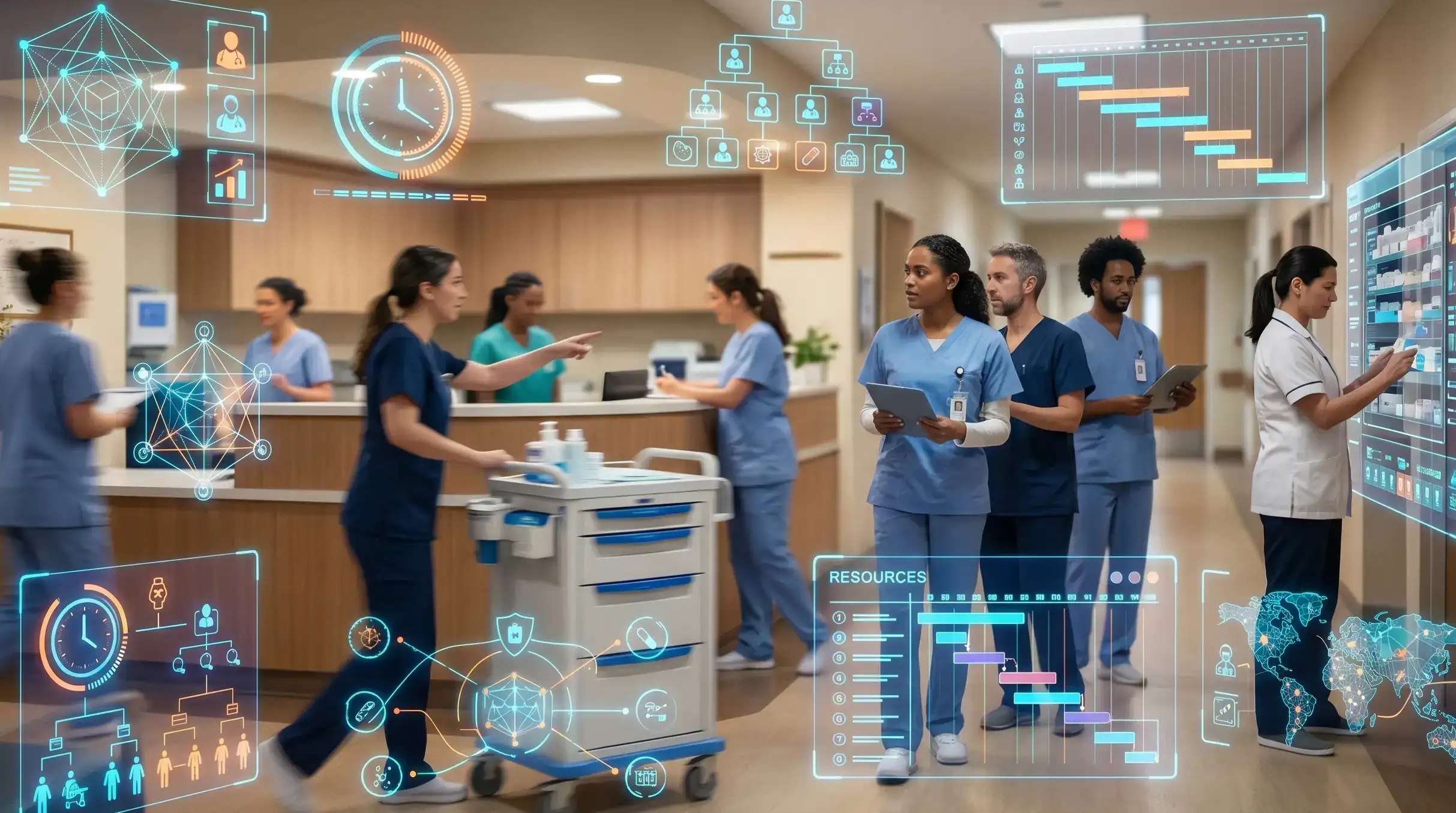
A static paper rota is a severe operational liability because it fundamentally cannot react to the high-acuity shifts of a modern care facility. If a resident suddenly requires 1-to-1 care, a manager using analog tools must spend hours frantically calling off-duty staff.
Conversely, the
Dynamic Response capacity of elite hr software for care homes allows for “Drag-and-Drop” adjustments that instantly dispatch push notifications to all qualified, available staff regarding an “Open Shift”.
However, providers must aggressively avoid the “Generic Platform Trap.” Implementing generic, corporate HR software designed for office workers is a fatal error.
These platforms categorically lack shift-based compliance, complex sleep-in pay logic, and the mobile-first architecture required by deskless workers. Investing exclusively in specialized hr software for care homes guarantees a “triple win”: it protects margins for the organization, provides autonomy for the staff, and ensures the absolute continuity of care required for the resident.